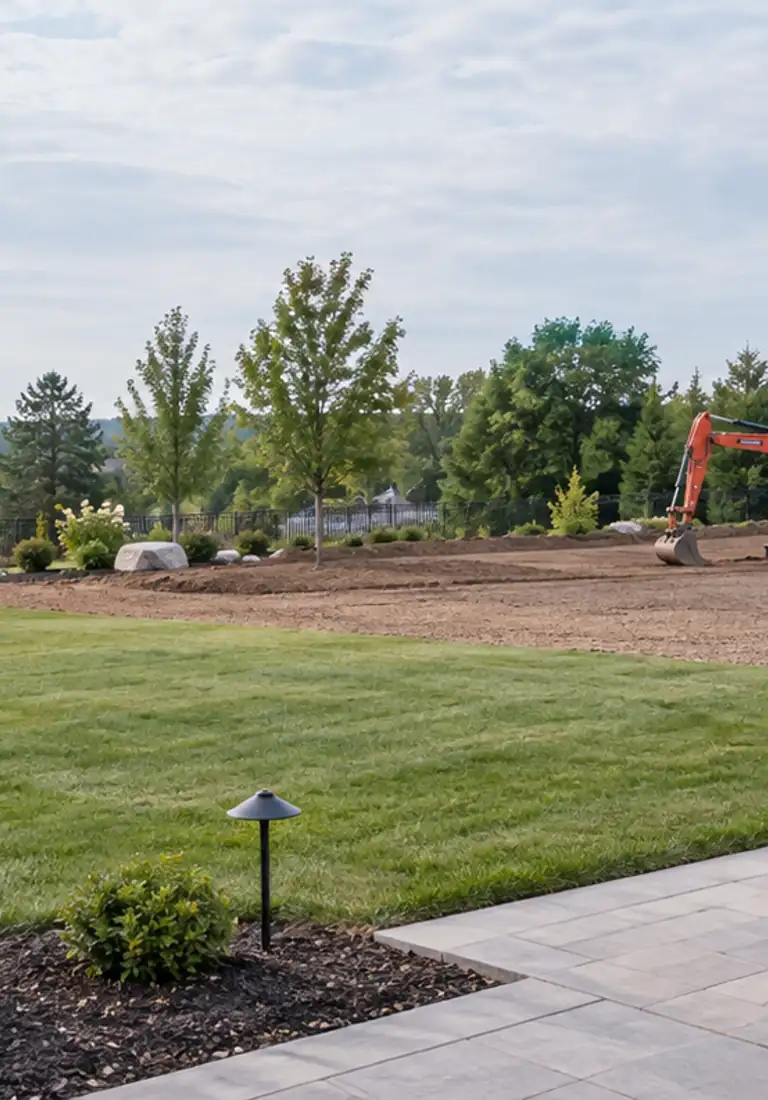
Full & Partial Pool Removal in Pittsburgh
Use these common pool removal scopes to compare written bids in Pittsburgh. The exact work should follow the property, permit, and intended site use.
Pool Demolition
Complete Structural Breaking
Concrete and gunite pools typically require structural breaking, equipment access, debris hauling, and an approved disposal plan.
- Concrete pool removal
- Gunite demolition
- Structural clearing
Pool Removal
Site Clearing & Fill-In
Full removal and partial demolition-and-fill are different scopes. The right choice depends on local approval, future site use, fill specifications, and drainage.
- Full & Partial removal
- Backfilling
- Compaction testing
Pool Excavation
Shell Extraction & Grading
Fiberglass and vinyl pools can involve shell extraction, utility disconnection, hauling, backfill, compaction, and final grading.
- Fiberglass extraction
- Vinyl shell removal
- Precision grading
Pittsburgh, PA Project Data
$10,145
Range: $3,689–$16,601
5–7 Days
Fast 48h scheduling
Required
Confirm responsibility in the written scope
Local planning figures for Pittsburgh — review sources and quote details
Pool Removal in Pittsburgh: What to Expect
Pool removal in Pittsburgh mostly comes down to the expansive clay. The ground here is clay that swells when it is wet and shrinks when it dries, which is what cracks slabs and shifts foundations. Most jobs run five to ten days once permits clear, and the cost stays predictable when the site work is done right the first time.
Planning for Pittsburgh & Surrounding Jurisdictions
Pittsburgh's unique topography and geology present distinct challenges for pool removal. The region is underlain by clay-rich soils, particularly the Dunkirk and Guernsey series, which are expansive and prone to shifting. This means proper compaction and fill are critical to prevent future settling. Additionally, Pittsburgh's hilly terrain often results in narrow access points and limited working space, requiring specialized equipment like compact excavators. The climate, with its freeze-thaw cycles and average annual rainfall of 38 inches, can complicate excavation and increase erosion risks. Local regulations, enforced by the Allegheny County Health Department and the City of Pittsburgh's Department of Permits, Licenses, and Inspections, mandate permits for pool removal. In neighborhoods like Squirrel Hill, Shadyside, and Lawrenceville, older homes with inground pools may also have utility lines that need careful mapping. Our team is well-versed in these local nuances, ensuring a smooth and compliant removal process.
August 2026 Update: Demand in Pittsburgh has remained strong as we close out the summer. While local Pennsylvania disposal fees have crept up slightly, our streamlined extraction process keeps costs predictable for Pittsburgh homeowners.
Planning area:
We proudly serve the Greater Pittsburgh area, including Allegheny County and surrounding communities. Our coverage includes the East End neighborhoods of Squirrel Hill, Shadyside, Point Breeze, and Regent Square, as well as the South Hills (Mount Lebanon, Bethel Park, Upper St. Clair), North Hills (Ross Township, McCandless), and West suburbs like Carnegie and Robinson. We also handle projects in the city's riverfront districts such as Lawrenceville, Strip District, and the North Side. Whether your pool is in a tight urban lot or a sprawling suburban backyard, our team has the local knowledge and equipment to manage access and logistics efficiently.
Pool Removal Services in Pittsburgh
Four ways to reclaim your yard — from burying the shell to hauling everything out and putting grass back.
Pittsburgh Pool Demolition & Excavation
Concrete, fiberglass, vinyl, and gunite pools require a written removal scope covering the shell, utilities, hauling, and backfill.
What's Included:
- Concrete pool demolition
- Fiberglass pool removal
- Vinyl liner pool excavation
- Gunite pool demolition
- Utility disconnection
Partial Pittsburgh Pool Removal
Break the top of the shell, punch drainage holes, fill it in. Cheaper, faster, and done in a few days.
What's Included:
- Top 18" pool excavation
- Drainage holes
- Clean fill material
- Concrete breaking
Full Pittsburgh Pool Excavation
Everything comes out — shell, rebar, plumbing. You're left with clean ground you can build on.
What's Included:
- Total pool excavation
- Concrete pool removal
- Fiberglass pool extraction
- Complete material hauling
- Site preparation
Backfill & Landscaping
A complete restoration scope can include compacted fill, finish grading, seed, or sod based on the property's next use.
What's Included:
- Post-excavation soil compaction
- Grading & leveling
- Seed or sod installation
- Outdoor living space preparation
Not Sure Which Service You Need?
Not sure which one? Tell us what you've got and we'll say what it needs — partial usually does the trick unless you're building over it.
Why Project Costs Vary in Pittsburgh
Understanding the local variables that influence your final estimate.
Cost Drivers & Mitigation
Pittsburgh's clay soil is a major factor in pool removal. Clay expands when wet and contracts when dry, which can lead to shifting if not properly managed.
Timeline & Seasonality
To mitigate this, we often use a mix of native soil and granular fill, compacted in lifts to prevent settling. The region's hilly terrain also means many pools are built on slopes, requiring careful grading and erosion control.
Local Logistics & Access
Additionally, the city's aging infrastructure means that underground utilities (gas, water, electric) are often encountered; we always coordinate with 811 for utility marking before excavation. Seasonally, spring and fall are ideal for pool removal, as the ground is not frozen, and the weather is moderate.
Property Value Impact
Winter can be challenging due to frozen ground and snow, while summer's heat can make working in confined spaces uncomfortable. We advise planning your project during mild weather to avoid delays.
Compare Evidence, Not Just Price
A clear Pittsburgh pool removal quote tells you what will be removed, what the finished site will look like, and which costs are included. Use these details to compare proposals before choosing.
- Credentials: license, insurance certificate, and responsible contracting entity.
- Scope: full or partial pool removal, utilities, access, hauling, backfill, compaction, and grading.
- Approvals: permit applicant, inspections, testing, and final closeout.
- Evidence: recent comparable references, disposal records, warranties, and change-order terms.
Permit Roadmap: Pittsburgh
Use this PA planning outline, then confirm the property-specific process with the responsible authority and contractor.
Permit Requirements
In Pittsburgh, pool removal typically requires a permit from the City of Pittsburgh's Department of Permits, Licenses, and Inspections (PLI). The process involves submitting a building permit application, which includes a site plan, a description of the work, and proof of property ownership.
Process & Documentation
For inground pools, a demolition permit is generally required. As of 2025, the permit fee is approximately $75 for residential structures, but it can vary based on the project's scope.
Fees & Timelines
You may also need to obtain a separate permit for any electrical or plumbing work, with fees ranging from $50 to $150. The application must be accompanied by a detailed plan showing how the pool will be filled or removed, and the final inspection is required to ensure proper backfill and compaction.
Special Local Regulations
The permit approval typically takes 2-4 weeks. If your property is in a historic district or has easements, additional approvals may be needed.
Environmental & Zoning
We recommend consulting with the PLI office at 412-255-2175 or visiting their office at 200 Ross Street to confirm specific requirements for your project.
Pool Removal FAQs for Pittsburgh
Get answers to the most common questions about pool removal. Don't see your question? Use our cost guide or contact us online.
Yes, a demolition permit is required from the City of Pittsburgh's Department of Permits, Licenses, and Inspections. The fee is around $75, and the process takes 2-4 weeks. You'll need to submit a site plan and schedule a final inspection.
On average, pool removal in Pittsburgh costs between $3,000 and $10,000, depending on pool size, depth, and accessibility. Concrete pools are more expensive to remove than vinyl or fiberglass. Additional costs may include permit fees, utility location, and disposal fees.
Typically, pool removal takes 3 to 7 days, but this can vary based on weather, permit approval, and the complexity of the site. Clay soil may require extra time for proper compaction.
The primary soil type is clay, which expands and contracts with moisture, leading to potential settling. Excavation can be difficult when the clay is wet and sticky. We often need to use special equipment and proper compaction techniques to ensure stability.
Yes, but winter can be problematic due to frozen ground, which makes excavation harder and can damage equipment. Spring and fall are ideal. Summer is possible but can be hot and dry, affecting soil moisture. We always assess conditions to ensure safety and efficiency.
Success Stories
Real projects from your neighbors in Pittsburgh.
Success Story 1
"Case Study 1: Squirrel Hill - Inground pool removal, 20x40 ft, with clay soil and limited access via a narrow side yard...
Soil & Geology in Pittsburgh
The ground under Pittsburgh is Clay-rich soils (Dunkirk and Guernsey series), expansive and prone to shifting.
That matters more than most homeowners realize. It is clay that swells when it is wet and shrinks when it dries, which is what cracks slabs and shifts foundations, so we over-excavate and backfill with a stable mix compacted in lifts. For pool removal, the excavation and backfill have to be right or the yard settles within a year. The freeze-thaw cycle here means we compact below the frost line.
How the Project Works
A typical pool removal job in Pittsburgh runs five to ten working days from mobilization to final grade. The first step is always the same: mark utilities, pull the permit, and stage equipment. Narrow access means compact equipment and careful rigging buried utilities have to be located and marked before we start. Debris is hauled same-week, and the freeze-thaw cycle here means we compact below the frost line.
Permit Details & Inspections
For pool removal in Pittsburgh, the permit package usually needs a site plan, proof of insurance, and a utility release from each provider. An inspection is typically scheduled before backfill, so the fill and compaction are verified while the work is still open. Narrow access means compact equipment and careful rigging buried utilities have to be located and marked before we start.
Yard Restoration & Backfill
After the pool shell is out in Pittsburgh, the site is backfilled with clean structural fill in compacted lifts. That is the step that separates a yard that stays flat from one that sinks a year later, especially with Clay-rich soils (Dunkirk and Guernsey series), expansive and prone to shifting.
We grade for positive drainage away from the house, then leave the pad ready for sod, seed, or a new build. We over-excavate and backfill with a stable mix compacted in lifts, and the freeze-thaw cycle here means we compact below the frost line. The finished yard holds up through the seasons.
Pennsylvania Service Areas
Explore pool removal in Pennsylvania and nearby border communities. Requirements depend on the project address.
More City Guides
Get Your Pittsburgh Pool Removal Estimate
Tell us about your Pittsburgh project to see a local range and request property-specific quotes.
Pool Removal Costs
Understand the full project scope. See our 2026 Pool Removal Cost Guide for detailed pricing breakdowns.
Property ROI
Does pool removal increase home value? Read our detailed guide to resale value impacts.