Why Generic Demolition Contractors Fail in Richmond
Removing a structure in the local area isn't just about heavy machinery. It requires strict adherence to local zoning laws and an understanding of the exact environmental factors of Richmond County.
Richmond County Permitting
Before our excavators ever touch your property, we secure all mandatory structural demolition permits directly through the Richmond County building department.
Local Environment & Logistics
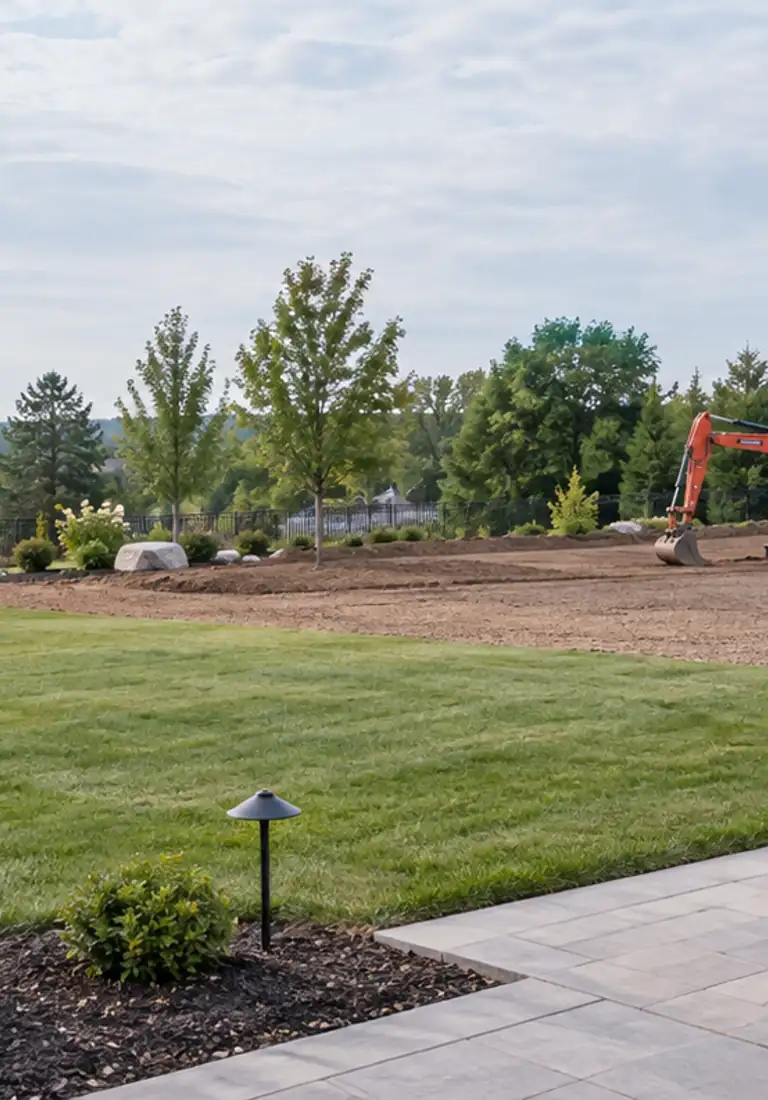
Proper compaction is critical after demolition. We engineer the site fill to prevent future foundation shifting or extreme settling, adapting to specific local environmental conditions.
- Soil Composition: Piedmont clay (expansive, high plasticity)
- Climate Factors: Hot, humid summers; mild winters with occasional freezing; heavy rainfall in spring and fall
- Local Obstacles: Narrow streets, historic structures, underground utilities, high water table in low-lying areas
Responsible Debris Recycling
We don't just dump structural waste anywhere. Concrete, rebar, and lumber from your demolition project in Richmond are carefully separated and transported to approved recycling facilities, keeping thousands of tons of debris out of local landfills and keeping our local Richmond County community clean.
Demolition Scope Options in Richmond
Use these common demolition scopes to compare written bids in Richmond. The exact work should follow the property, permit, and intended site use.
Structural Demolition
Complete Tear-Downs
Structural demolition may cover sheds, garages, decks, or full buildings. Permit, utility, hazardous-material, and debris requirements depend on the structure.
- Building demolition
- Deck & patio removal
- Structural clearing
Site Clearing
Debris Removal & Grading
Site clearing scopes should spell out debris hauling, legal disposal, erosion controls, imported material, drainage, and finish grade.
- Lot clearing
- Debris hauling
- Land grading
Concrete Breaking
Slab & Driveway Removal
Slab, driveway, and foundation removal should identify work limits, reinforcement, utility conflicts, hauling, disposal, and the restored surface.
- Driveway removal
- Foundation breaking
- Concrete disposal
Richmond, VA Project Data
$10,115
Range: $3,678–$16,552
5–7 Days
Fast 48h scheduling
Required
Confirm responsibility in the written scope
Local planning figures for Richmond — review sources and quote details
Demolition in Richmond: What to Expect
Demolition in Richmond mostly comes down to the expansive clay. The ground here is clay that swells when it is wet and shrinks when it dries, which is what cracks slabs and shifts foundations. Most jobs run five to ten days once permits clear, and the cost stays predictable when the site work is done right the first time.
Planning for Richmond & Surrounding Jurisdictions
Richmond's demolition projects face unique challenges. The city's geology is dominated by Piedmont clay, which expands and contracts significantly with moisture, affecting foundation removal and excavation. Additionally, many neighborhoods like The Fan and Church Hill feature narrow streets and historic structures requiring careful, staged demolition. Local regulations, including the Virginia Uniform Statewide Building Code (USBC) and Richmond's own demolition permit requirements, mandate asbestos surveys and notification of utilities. Our team navigates these hurdles daily, ensuring projects are safe, compliant, and efficient. We understand the importance of minimizing disruption in dense urban settings and protecting adjacent properties.
Planning area:
We proudly serve the entire Richmond metropolitan area, including the neighborhoods of The Fan, Church Hill, Jackson Ward, Manchester, Scott's Addition, and the West End. Our service radius extends to Chesterfield County, Henrico County, and Hanover County, covering suburbs like Midlothian, Short Pump, and Mechanicsville. From historic homes to commercial structures, we handle demolition projects of all sizes within a 50-mile radius of downtown Richmond.
Demolition Services in Richmond
From complete structural demolition to partial tear-downs and site clearing, we offer comprehensive solutions tailored to your specific project needs.
Complete Richmond Demolition & Excavation
Total structural demolition and excavation for residential and commercial properties, including full foundation removal and site clearing.
What's Included:
- Structural demolition
- Foundation removal
- Site excavation
- Debris hauling
- Utility disconnection
Partial Richmond Demolition
Cost-effective partial demolition that removes targeted structures or sections while preserving designated areas of the property.
What's Included:
- Targeted structure removal
- Selective demolition
- Clean fill material
- Concrete breaking
Lot Clearing & Grading
Complete lot clearing, land leveling, and grading to prepare your site for new construction or landscaping projects.
What's Included:
- Vegetation removal
- Debris hauling
- Site leveling
- Compaction
- Preparation for build
Backfill & Landscaping
Professional grading, soil preparation, and landscaping to complete your demolition transformation and maximize usable land space.
What's Included:
- Post-excavation soil compaction
- Grading & leveling
- Seed or sod installation
- Erosion control
Not Sure Which Service You Need?
Share the property details for review of the structure, access, intended site use, and appropriate demolition method.
Why Project Costs Vary in Richmond
Understanding the local variables that influence your final estimate.
Cost Drivers & Mitigation
Richmond's Piedmont clay soil is a common challenge, as it can be highly expansive and difficult to excavate, especially after rain. The city's humid subtropical climate means hot, humid summers and mild winters, but freezing temperatures in January and February can cause the ground to harden, complicating excavation.
Timeline & Seasonality
Additionally, many older structures in Richmond contain lead paint and asbestos, requiring specialized abatement. Dense urban neighborhoods often have limited access, so we use compact equipment and careful planning to protect adjacent structures and utilities.
Permit Roadmap: Richmond
Use this VA planning outline, then confirm the property-specific process with the responsible authority and contractor.
Permit Requirements
In Richmond, VA, a demolition permit is required for any structure removal. The permit is issued by the City of Richmond Department of Planning and Development Review.
Process & Documentation
The application must include a site plan, asbestos survey (if applicable), and proof of utility disconnection. The fee is based on the valuation of the project, typically ranging from $100 to $500 for residential structures.
Fees & Timelines
The approval process usually takes 2-4 weeks, but expedited review is available for an additional fee. Additionally, if the structure is historically designated, a Certificate of Appropriateness from the Commission of Architectural Review is required.
Special Local Regulations
For state-level guidance, the Virginia Department of Environmental Quality oversees asbestos abatement for structures with more than 200 square feet of regulated material.
Demolition FAQs for Richmond
Get answers to the most common questions about demolition and site clearing. Don't see your question? Use our cost guide or contact us online.
Yes, a demolition permit is required in Richmond. The City of Richmond Department of Planning and Development Review issues permits. The application requires a site plan, asbestos survey, and proof of utility disconnection. Fees range from $100 to $500 for residential structures. Approval typically takes 2-4 weeks. If the structure is historic, additional approval from the Commission of Architectural Review is needed.
The average cost of demolition in Richmond ranges from $5,000 to $15,000 for a typical single-family home, depending on size, construction type, and accessibility. Factors such as asbestos abatement, utility disconnection, and disposal fees can increase costs. For commercial structures, costs are higher, often $20,000 to $100,000+.
Most residential demolitions in Richmond take 1-2 weeks, including permit approval (2-4 weeks) and actual demolition (2-5 days). Commercial projects may take 3-6 weeks. Weather delays due to rain or freezing can extend timelines, especially with clay soil excavation.
Richmond's soil is primarily Piedmont clay, which is expansive and can shrink or swell with moisture changes. This makes excavation difficult, especially after rain, and can affect foundation removal. In low-lying areas, a high water table may require dewatering. Rocky soil is less common but can be found in parts of the city.
Yes, but weather can impact scheduling. The best times are spring and fall when temperatures are moderate. Summer heat can be challenging for workers, and winter freezes can harden the ground, making excavation harder. Rainy periods (spring and fall) can cause muddy conditions, especially with clay soil, but we plan accordingly.
Success Stories
Real projects from your neighbors in Richmond.
Success Story 1
"Case Study 1: A 1920s residential building in The Fan required full demolition. The site was surrounded by historic hom...
Soil & Geology in Richmond
The ground under Richmond is Piedmont clay (expansive, high plasticity).
That matters more than most homeowners realize. It is clay that swells when it is wet and shrinks when it dries, which is what cracks slabs and shifts foundations, so we over-excavate and backfill with a stable mix compacted in lifts. For demolition, the excavation and backfill have to be right or the yard settles within a year. The freeze-thaw cycle here means we compact below the frost line.
How the Project Works
A typical demolition job in Richmond runs five to ten working days from mobilization to final grade. The first step is always the same: mark utilities, pull the permit, and stage equipment. Narrow access means compact equipment and careful rigging a high water table means dewatering before we open the hole. Debris is hauled same-week, and the freeze-thaw cycle here means we compact below the frost line.
Permit Details & Inspections
For demolition in Richmond, the permit package usually needs a site plan, proof of insurance, and a utility release from each provider. An inspection is typically scheduled before backfill, so the fill and compaction are verified while the work is still open. Narrow access means compact equipment and careful rigging a high water table means dewatering before we open the hole.
Yard Restoration & Backfill
After the structure is down in Richmond, the site is backfilled with a graded base material in compacted lifts. That is the step that separates a yard that stays flat from one that sinks a year later, especially with Piedmont clay (expansive, high plasticity).
We grade for positive drainage away from the house, then leave the pad ready for sod, seed, or a new build. We over-excavate and backfill with a stable mix compacted in lifts, and the freeze-thaw cycle here means we compact below the frost line. The finished yard holds up through the seasons.
Virginia Service Areas
Explore demolition in Virginia and nearby border communities. Requirements depend on the project address.
More City Guides
Get Your Richmond Demolition Estimate
Tell us about your Richmond project to see a local range and request property-specific quotes.
Demolition Costs
Understand the full project scope. See our 2026 Demolition Cost Guide for detailed pricing breakdowns.
Site Reuse Planning
Plan what comes after removal. Review our demolition and site-preparation overview.